

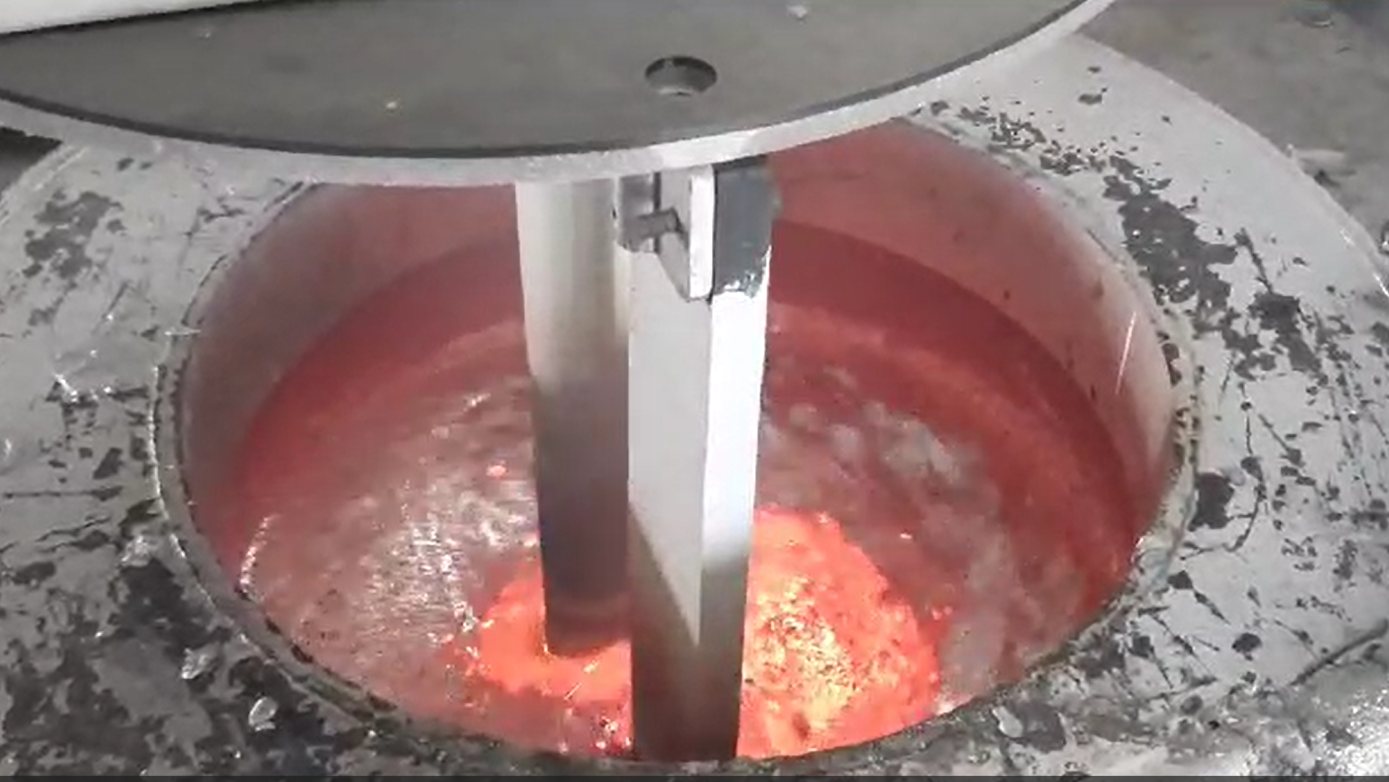
Four checks stand between the ingot and the shot
Chemistry, dissolved hydrogen, degassing parameters and die coat consistency. Get these right and the vast majority of casting defects never appear. Get them wrong and no amount of downstream inspection recovers the part.
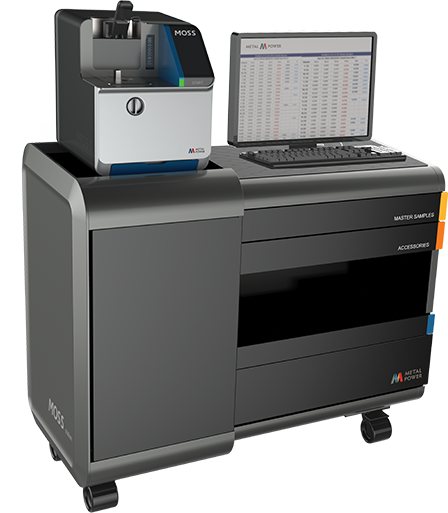
Every melt is spectro-tested in-house
A Metal Power MOSS optical emission spectrometer sits on our floor, not at a third-party lab. That means chemistry is confirmed before casting rather than certified afterwards.
- 15+ elements analysed across multiple alloy bases
- Multi-base capability — Al‑Si, Al‑Cu and Al‑Mg grades
- Nitrogen analysis capable
- Fully digital, current-controlled source for high accuracy and precision
- 2,000+ burns per argon cylinder
- Seamlessly upgradable as our alloy range grows
Poka-yoke on the parameters that matter
Rotary degassing with flux injection through a high-purity graphite rotor. The important part is not the machine — it is that an operator cannot run it outside window.
Error-proofing interlocks
- Gas pressure low/high interlock
- Gas flow low/high interlock
- Rotor shaft choke-up interlock
- Cover flux level alarm
- Limit switch interlock
- Digital temperature display
Recorded, not remembered
- Degassing time, gas pressure, flow and rotor speed error-proofed
- Operation cycle data printed and recorded
- Rotor shaft coating reminder
- Cover flux and nitrogen consumption tracked
- Auto cover flux granule feeder
- Automatic baffle plate up-down movement
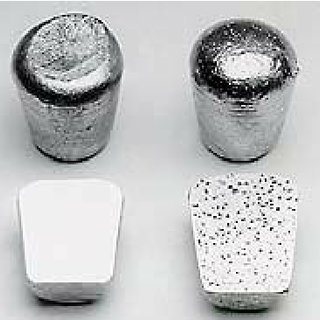
Reduced pressure test, before release
Dissolved hydrogen is the single largest cause of porosity in aluminium castings. We draw a vacuum sample from the melt, section it, and read the result against a known standard.
- Vacuum range 0–700 mmHg, cycle time 0–2 minutes, PLC controlled
- Equipment sits beside the furnace — no sample transport, no delay
- Quick pre-assessment of porosity and blowholes
- Degassing parameters adjusted for the next treatment based on the result
- Melt released only by a QA-authorised person
- Every reading entered in the melting quality log book
Fast, repeatable and reliable — the test is run on the floor, in-cycle, not sent away.
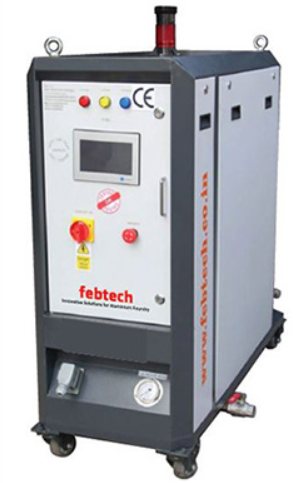
Consistent coat, measured consumption
Die coat ratio drift is an invisible variable that shows up as surface defects and soldering. An automatic mixing unit removes the guesswork.
- Adjustable die coat mixing ratio
- Controlled, measured die coat consumption
- One unit supplies multiple HPDC machines
- Stainless steel tanks and frame — no rust contamination
- Additional safety sensor against water overflow
- Self-diagnosing system
- Resettable cycle counter shows utilisation per day
- 50 litres per hour capacity
Simulation before steel
For new parts we model the shot first — and share the study with you, so tooling decisions are made on evidence rather than experience alone.
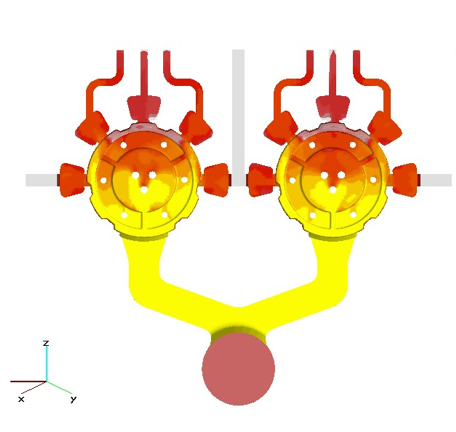
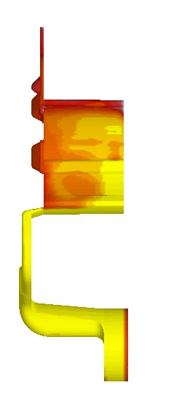
Filling & velocity
Fill pattern and gate velocity checked against the alloy's limits before the runner is cut.
Shrinkage & porosity
Shrinkage zones predicted, then addressed with overflow placement or squeeze pin action.
Air entrapment & temperature
Trapped-air pockets located so venting is designed in, and cooling lines sized correctly first time.
Finishing under one roof
Trimming
20 T four-pillar hydraulic press, 600 × 450 mm table, twin pump (LPHV & HPLV), 5 HP / 3.75 kW, with photoelectric sensor and safety door.
Shot blasting
300 kg hanger type automatic machine using 0.5 mm stainless steel ball for a bright, consistent finish at high throughput.
CNC turning
Ace Micromatic Super Jobber 500 LM — chuck diameter 250 mm, turning length 500 mm. A Brother Speedio S700Bd2 VMC joins the line in March 2027, with a Mitutoyo CMM following in 2027.
Cutting & sanding
3 HP band saw for gate and runner removal, plus 150 × 750 mm belt sanding for parting line and witness mark cleanup.
Leak testing
Wet and dry leak testing for pressure-critical castings — pneumatic cylinder covers, brake valve bodies and fuel dispensing components.
Surface treatment
Powder coating, E-coating, painting, anodising and chromating through qualified partners, inspected on return before dispatch.
Alloys we run — and why we pick them
We do not treat alloy as a default. It is selected against the part's actual duty — wear, load, corrosion or thermal.
| Alloy | Chosen for |
|---|---|
| ADC 12 | General purpose HPDC — good castability and strength, our most-run grade |
| A413 | Pressure tightness and thin-section fill, e.g. street light housings |
| Hyper-eutectic, 16% Si | Wear resistance in sliding contact |
| AlMg2 (no silicon) | Load-bearing strength — cable hangers rated to 400 kg static load |
| Aluminium 6061 | Proto and development work requiring downstream heat treatment |
Al‑Si, Al‑Cu and Al‑Mg families are all within our spectrometer's analysis range.
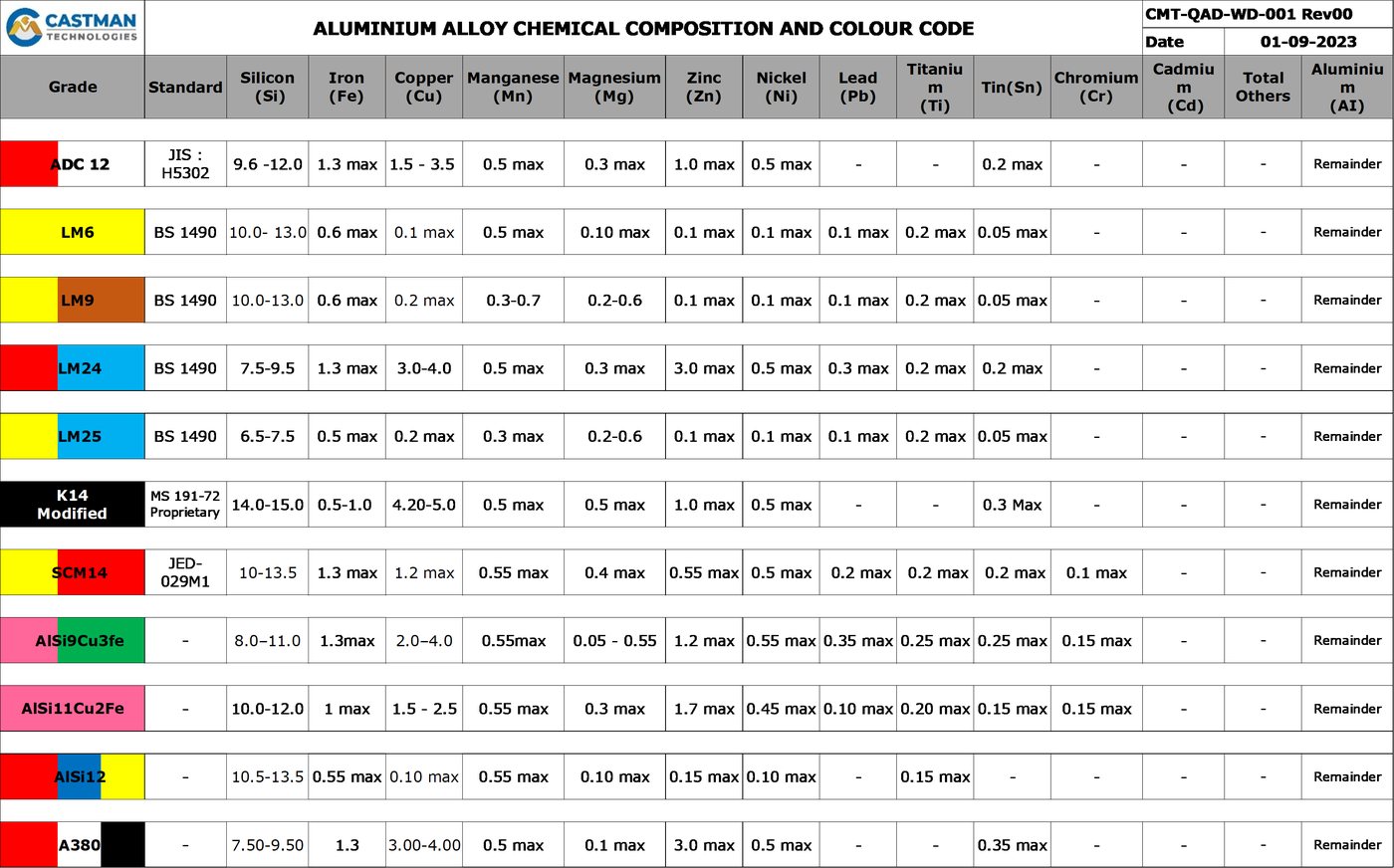
Individual ingots identified by colour code and heat number, so every casting traces back to a known batch.
Have a difficult part in mind?
Thin walls, tight tolerance, pressure tightness or an awkward alloy — send the drawing and we will tell you honestly whether we are the right plant for it.